Mechanical Systems Design, Design for Mass and Energy Efficiency
Rapid Prototyping Gear Transmission
A gear-based transmission system with maximized efficiency and minimized mass which converts a tensile load of 20 N to a lifting force of 200 N.
Objective
To convert a mass lowering by 2 meters into lifting a 20 kg lever by 10 centimeters. The amount of dropping mass needed to achieve this lift and the mass of the designed solution should be as small as possible.
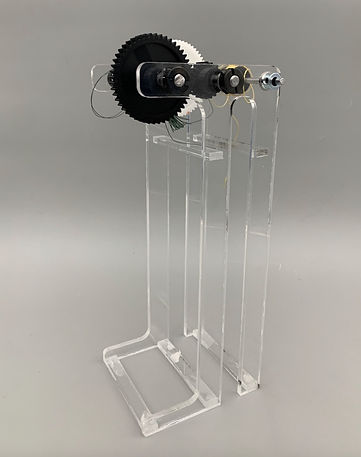
Outcome
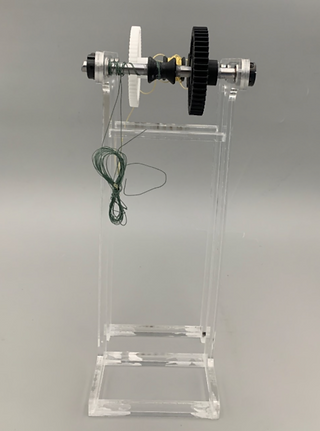
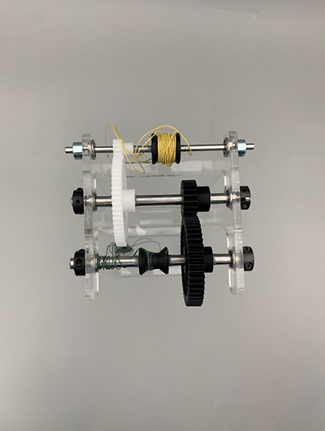
We used a rapidly prototyped gear transmission system that lifted the lever using a tension force from a 1.8kg hanging mass. We performed gear ratio calculations to select the required components and back of the envelope analysis and FEA to eliminate non-critical mass.
Design Scenario & Solution

Scenario: Create machine to lift lever using the motion of the lowering mass.

Solution: Use a gear train to increase the mechanical advantage and provide enough force to lift the lever.
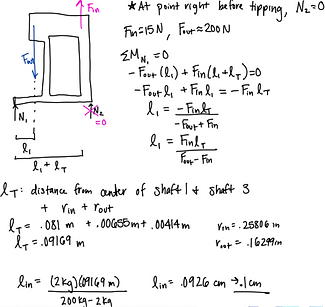
Design Calculations and FEA

Every feature of our design, from the gear selection to the structure dimensions, was informed by calculations to maximize both energy and mass efficiency. Working on a team of three, I spearheaded the transmission calculations and the support structure design.


Skills and Takeaways
-
How to design for mass efficiency and energy efficiency, rather than try to incorporate them later
-
How to use quick FBDs to inform intuition and guide early design choices
-
BOTEA and FEA are not a perfect representation of real life... prototype early and often!
-
Simple experimentation is a great way to test assumptions
-
Inaccurate FEA setups lead to meaningless results... spend time making sure the entire system is represented accurately
-
Other skills gained: mechanical systems design, teamwork and communication, task delegation, technical report and project documentation